Renters' Rights Act 2026: What UK Landlords Must Do Before 31 May
The Renters' Rights Act came into force on 1 May 2026. Here's exactly what UK landlords must do before the 31 May deadline and the £7,000 fine you need to avoid.
TL;DR
- Assured shorthold tenancies converted to periodic assured tenancies on 1 May 2026; Section 21 is closed for fresh possession action
- You must serve the official GOV.UK Renters' Rights Act Information Sheet to every qualifying tenant by 31 May 2026 (fines up to £7,000 per tenancy)
- Valid service requires the actual PDF to reach each tenant — a link in a text or email on its own does not count
- Rent increases after 1 May use Section 13 and Form 4A; old rent review clauses in agreements no longer work
- Councils have stronger pre-complaint enforcement; fragmented records make every deadline harder to prove
In this article(8)
Introduction
Fifteen days. That's how long private landlords have left before the first hard deadline under the Renters' Rights Act bites.
The Act came into force on 1 May 2026. Most landlords know it's happening. Fewer have actually sat down and worked out what it means for their specific tenancies - which ones are affected, what needs serving, and what happens if something slips.
Here's the clear version. What needs doing, when, and why it matters.
What Actually Changed on 1 May
Assured shorthold tenancies are gone. Every existing AST in England converted automatically to a periodic assured tenancy on 1 May - regardless of whether you've touched your paperwork.
No more fixed terms. No more Section 21. The last day to serve one was 30 April. That window is closed.
Possession now runs entirely through Section 8 and the updated grounds. That's a real shift - not just in how you recover a property, but in how you think about the whole tenancy relationship from the start.
The 31 May Deadline - and the £7,000 Fine
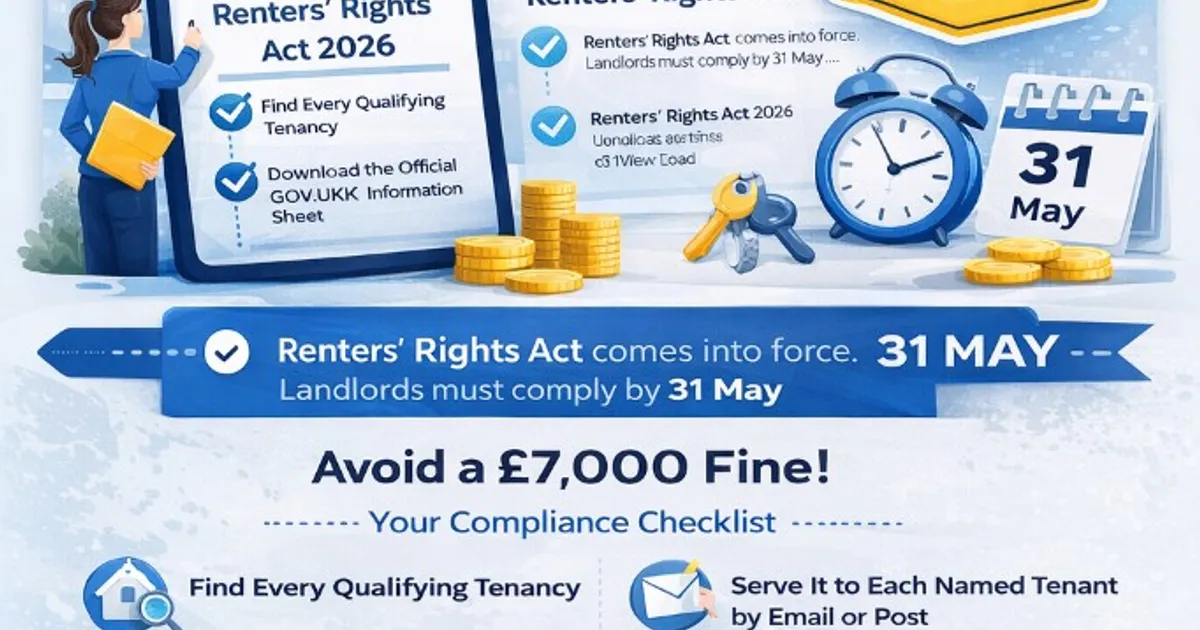
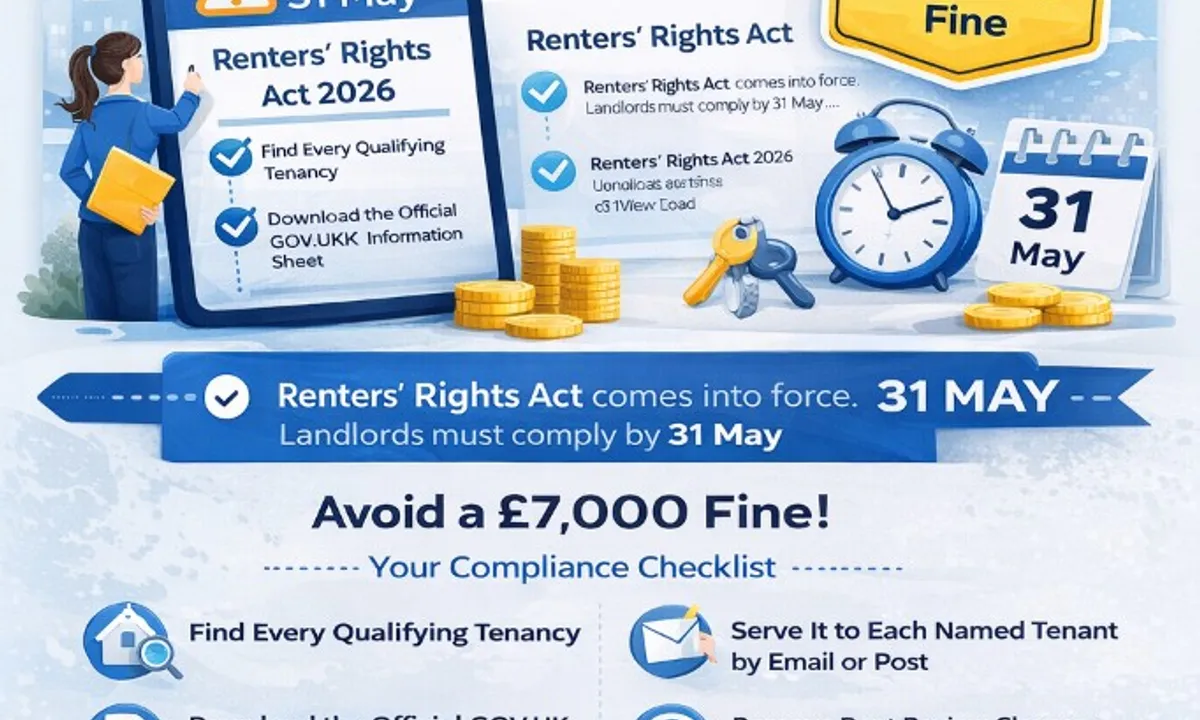
This is the urgent one. The government has published an official Renters' Rights Act Information Sheet, and you're legally required to give it to every qualifying tenant by 31 May 2026.
Miss that date, and the fine is up to £7,000 per tenancy.
The serving rules are strict:
- You must hand over the exact PDF from GOV.UK - no paraphrasing, no third-party versions
- Emailing or texting a link to the PDF does not count as valid service
- Every tenant named on the agreement needs their own copy
- If a letting agent manages the property, they must serve it too - even if you already have
The sheet covers the key changes: fixed terms gone, how rent increases now work, the end of Section 21, tenants' new rights around pets.
What This Means Beyond May
The 31 May deadline is the immediate fire. But the Act changes how you run a portfolio long after that.
Rent increases. Rent review clauses in tenancy agreements no longer work. Neither does an addendum. From 1 May, increases go through Section 13 - you issue the new Form 4A and follow the statutory process. Anything else won't be valid.
No more renewals into a fixed term. When a tenancy would have ended, it doesn't. It rolls on. That changes how you plan for vacant possession and how you handle rent adjustments going forward.
Decent Homes Standard. Not in force yet, but coming. Private rented properties will eventually need to meet the same standard as social housing. Damp, mould, heating failures and structural hazards will carry legal timescales for remedy - similar to Awaab's Law already applying in social housing. Documented inspections and repair logs now are considerably cheaper than scrambling when enforcement kicks in.
PRS Database. A national register for private landlords, with an annual fee, is due to roll out regionally from late 2026. You'll need to register and keep it updated when anything changes.
Where Most Portfolios Actually Fall Short
The problem usually isn't that landlords are ignoring compliance. It's that the records are everywhere.
Gas safety certificates in a folder on the desk. EICRs buried in an email thread from 2022. Deposit protection confirmation in a text message. The tenancy agreement - the one with the start date that matters for the Information Sheet - in a drawer somewhere.
That's fine when nothing's changing. But right now things are changing fast. When you need to confirm which tenancies qualify for the Information Sheet, whether an EPC is still valid, or whether a rent increase was handled correctly - scattered records slow you down and leave gaps.
And it's not just May. Making Tax Digital for landlords earning over £50,000 gross is already in force from April 2026. The PRS Database follows. Then Awaab's Law. Then the Decent Homes Standard. Each one needs documentation and a clear trail.
Before 31 May: Work Through This List
- Find every qualifying tenancy - any property with an AST that had a written agreement before 1 May 2026
- Download the official Information Sheet from GOV.UK - check it's the current version; only the exact PDF is valid
- Serve it to every named tenant by 31 May - email (the actual file, not a link), post or hand-delivery; keep a record of how and when
- Sort your rent increase process - remove review clauses from any future agreements and make sure you know how Form 4A works
- Check your certificates - gas safety, EICR and EPC should all be current and correctly served
- Get clear on Section 8 - know which grounds apply to your tenancies and what evidence you'd need
If you're managing more than a few properties, doing this manually across spreadsheets is slow and leaves gaps. LandoraHub tracks compliance deadlines, certificate dates and tenancy obligations in one place - so you can see where things stand without chasing folders.
The Enforcement Side
Local councils got expanded enforcement powers in December 2025. They can act now before a formal complaint - if they spot something wrong, they don't have to wait.
The numbers matter here. A £7,000 fine for missing the Information Sheet is the headline. But rent repayment orders under the Act can reach up to two years' rent. For a portfolio landlord, that's a serious hit.
The landlords most exposed aren't the ones who don't care. They're the ones who don't have a clear system for knowing what's been done, what hasn't, and what's due next.
A System That Keeps Up
The Renters' Rights Act is the biggest change to private renting in decades. But it's the start, not the end. MTD, the PRS Database, Awaab's Law and the Decent Homes Standard are all queued up behind it.
Running a portfolio on spreadsheets and email chains isn't impossible. But the compliance burden is now heavy enough that a proper system pays for itself in time saved and fines avoided.
LandoraHub tracks certificate dates, tenancy obligations and compliance deadlines in one place - with alerts before things become problems and exports you can actually use when you need to evidence something.
Frequently asked questions
What is the 31 May 2026 deadline for landlords?
You must serve the official GOV.UK Renters' Rights Act Information Sheet to every qualifying tenant by 31 May 2026. Missing the deadline can lead to fines of up to £7,000 per tenancy.
Can I email tenants a link to the Information Sheet?
No. Valid service requires the actual PDF document to reach each named tenant. A link on its own does not count.
Does Section 21 still work after 1 May 2026?
Section 21 is no longer available for fresh possession action under the new framework. Possession routes now run through Section 8 and updated grounds with evidence.
How do rent increases work after the Act?
Rent review clauses in tenancy agreements no longer work for increases after 1 May 2026. Increases must follow the Section 13 process using Form 4A.
Do letting agents have to serve the Information Sheet too?
Yes, if they manage the property. Every qualifying tenant needs their own copy, and service must be evidenced.
Keep reading
Next step
Build your deadline tracker with one property for free. Organise certificates and tenancy actions in one place, then verify final legal requirements through official channels.
Related guides
5 July 2026 · 7 min read
Section 13 Rent Increase Notice: Step-by-Step for UK Landlords 2026
After the Renters' Rights Act, rent rises use Section 13 and Form 4A. Notice periods, service rules, once-per-year limits, and the evidence you need if a tenant disputes the increase.
Read guide →11 April 2026 · 7 min read
Section 8 Grounds for Possession: A Practical Guide for UK Landlords
Section 21 is gone. This guide explains how Section 8 grounds work in 2026, which grounds landlords use most, and what evidence is needed for a stronger claim.
Read guide →28 March 2026 · 7 min read
Gas Safety, EICR and EPC: The Certificates Every UK Landlord Must Have in 2026
A practical certificate checklist for UK landlords: gas safety, EICR, EPC, renewal windows, and why expired records can now damage legal outcomes.
Read guide →